For Anyone Between 45 and 70 Who Hasn't Claimed Social Security Yet
The Wrong Social Security Decision Can Cost You Thousands. Every Year. For Life.
For 58% of Retirees, Social Security Is Their Biggest Income Source.
Most Planned for It to Be the Smallest.
Social Security Is Closer Than You Think, and You Need to Prepare.
At 45, Social Security feels like someone else's problem. It's out there, vague and distant, something that will sort itself out eventually. You'll deal with it when the time comes.
Then the time starts coming.
Maybe you're in your fifties now, and the question is getting louder. Maybe you're closer to 62, and the pressure is real. Maybe a friend just retired and mentioned a number that shocked you, or a family member made a decision you're not sure was right, and something clicked.
Whatever brought you here, the fact that you're asking the question now is one of the best financial decisions you'll make.
Because here's the truth: most people don't ask. They show up at the Social Security Administration website, stare at three benefit numbers, pick one that feels right, and live with that choice for thirty years.
That's not a plan. That's a guess. And the cost of guessing wrong can follow you and your spouse for the rest of your lives.
The difference between getting this right and getting it wrong is not complicated. It's information. Specifically, the right information, from a reliable source, at a time when you can still do something about it.
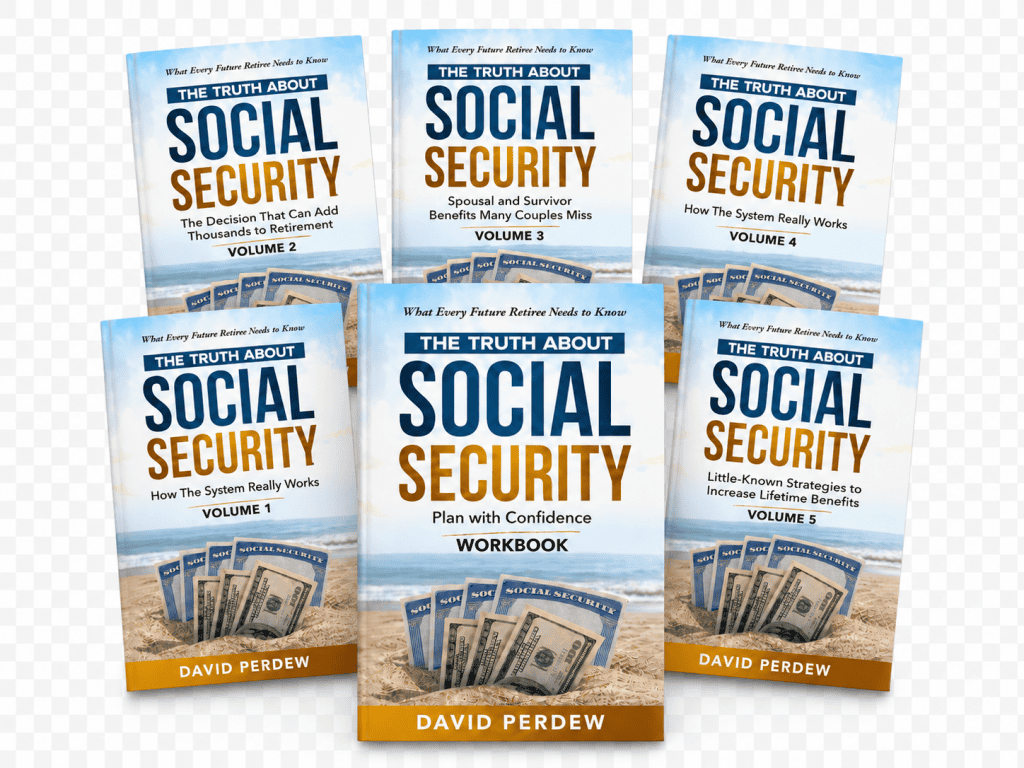
That's exactly why I’ve written The Truth About Social Security series. I’ve done the research for you.


You Only Get One Shot at This Retirement Decision
When do you claim Social Security?
The answer is: it depends.
But most people don't know what it depends on. They don't know which rules apply to their situation. They don't know what they're leaving on the table. And they don't know the mistakes they're quietly making right now, years before they ever file, that will follow them for the rest of their lives.
According to Gallup, 58% of retired Americans say Social Security is a significant source of their retirement income, while only 35% of those who are not yet retired expect it to be. Obviously, there’s a significant gap between reality and expectations.
And that gap tells you something important: Social Security ends up mattering far more than most people expect.
For three out of five beneficiaries aged 65 and older, it accounts for 50% or more of their total retirement income. Nearly one in five receives all of their income from Social Security, according to the Pension Rights Center in Washington, DC.
Social Security was never designed to be a full retirement. It was designed as one leg of a three-legged stool: Social Security, personal savings, and a pension or retirement account.
But for millions of Americans, two of those legs are shorter than expected. The savings aren't there. The pension disappeared a generation ago.
And Social Security, the one leg that's guaranteed and inflation-adjusted and impossible to outlive, becomes the thing holding the whole stool up.
Which means the decision of when and how to claim it is not a minor administrative task.
It is the most consequential financial decision most Americans make in their entire retirement. And most people make it without enough information.
What Happens if You Die First?
Think about what's actually at stake.
Claim too early because you're tired of working and the monthly check sounds good right now, and your benefit is permanently reduced. Not temporarily. Not adjusted later. That smaller number becomes your baseline for life, and every cost-of-living increase is calculated from that lower starting point.
The gap between what you receive and what you could have received keeps widening, year after year, for as long as you live.
And if your spouse outlives you, which statistically she probably will if you’re a man, the survivor benefit she receives is based on that reduced number. One decision, made in your early sixties, and your spouse is living with the consequences in their eighties.
Possibly alone. Possibly struggling.
There are other ways you can be surprised.
- If you don't know about the earnings test, you might be in for an ugly surprise. You can claim early, keep working part-time, and watch part of your benefit get withheld each month. Most people never see that coming.
- If you've been divorced after ten or more years of marriage, you may be entitled to a benefit based on your ex-spouse's record, one that doesn't affect what they receive at all. Most people who qualify have no idea it exists.
- If you took time out of the workforce to raise children or care for a parent, those years may show up as zeros in your earnings record, quietly dragging your benefit calculation down. There are ways to fix that before you claim. But the closer you are to claiming age, the more difficult it is to improve. Unfortunately, most people never know to look.
- If you're worried Social Security is going broke and you should grab it early before the money runs out, you may be making one of the most irreversible financial decisions of your life based on a fear that the actual data simply does not support.
The wrong choice doesn't announce itself. It doesn't send a letter. It just costs you, quietly, every single month, for the rest of your life.


Research Is the Only Thing That Separates a Smart Claim From an Expensive Guess.
My father worked for the same automobile manufacturer for forty-five years. He was loyal, capable, and proud of the career he built. When the company offered him an early retirement package in his late fifties, he took it.
A few years later, he started thinking about Social Security.
He had already survived two heart attacks and a double bypass. In his mind, the math was simple.
Take the money now. Why wait for something you might not live to collect? So he filed at 62 and started getting his monthly check.
He lived to be 91.
For nearly 30 years, he collected a benefit that had been permanently reduced because he claimed early. Every cost-of-living increase was applied to that smaller base number, so the gap between what he received and what he could have received kept widening, year after year, decade after decade.
By claiming early, he had also reduced the survivor benefit my mother would receive after he was gone. She, like every surviving spouse, would feel the consequences of that one decision for the rest of her life.
I understand why he made the choice he did.
The health concerns were real. The evidence pointed to a shorter life. And the very human instinct to take what's in front of you, rather than hold out for something uncertain, is hard to argue with when the evidence seems to be on its side.
He wasn't being reckless. He was being human. He was making a best-guess estimate of his own longevity without understanding the long-term consequences of the decision—like millions of Americans before him.
When My Time Came, I Did More Research.
It wasn't a deep dive, but the research showed I could strengthen my benefit before my claiming age by improving my earnings record in the years before I file.
I knew that was possible, so I did it. And I ended up in a better position.
But I'll be honest with you. I got lucky, too. Looking back, I barely knew anything. There were rules I'd never heard of, strategies I never used, and big decisions my wife and I made without really understanding what they'd mean years down the road.
Any of it could have gone differently. It worked out for me, but not because I mastered Social Security rules. I stumbled into enough of the right information at the right moment.
That's what bothered me enough to immerse myself in Social Security research and to write six books about it.






Meet Your Guides Tom and Linda Harper as They Evaluate Their Social Security Decisions and Avoid Common Mistakes.

What started as one small book to help my kids make smarter decisions became five volumes and a workbook covering nearly every situation a real person actually faces.
Along the way, you'll follow Tom and Linda Harper, a fictional couple that may have many of the same questions you have.
Join them at their kitchen table with two mugs of coffee and a legal pad, as they work through the process.
Their conversations make the rules concrete.
Their mistakes make the consequences real.
Their planning gives you a framework you can actually use. You’ll discover how they make the right claiming decisions (because it’s a family decision, not an individual one) from the many combinations.
These books are written for people between 45 and 70 who haven't claimed yet. People who still have time to get this right. Time to make adjustments. Time to fill gaps. Time to protect a spouse. Time to choose a date based on knowledge rather than a guess.
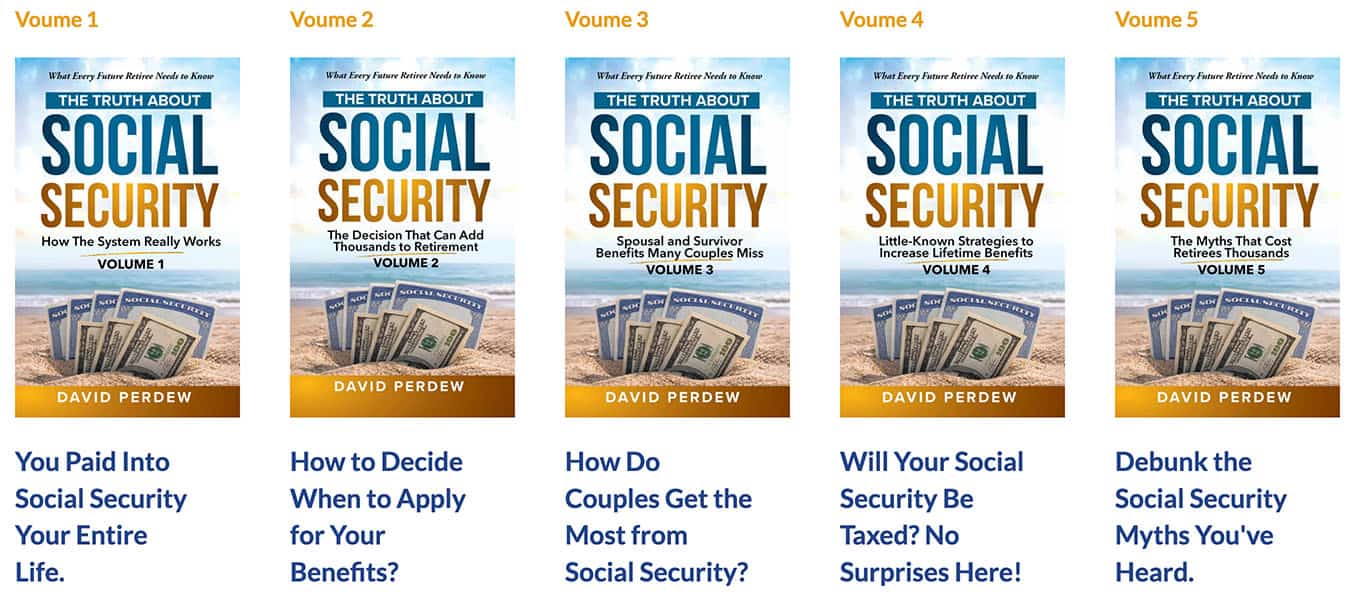
The Truth About Social Security Series: Your Guides to Making the Right Decisions for Your Future!
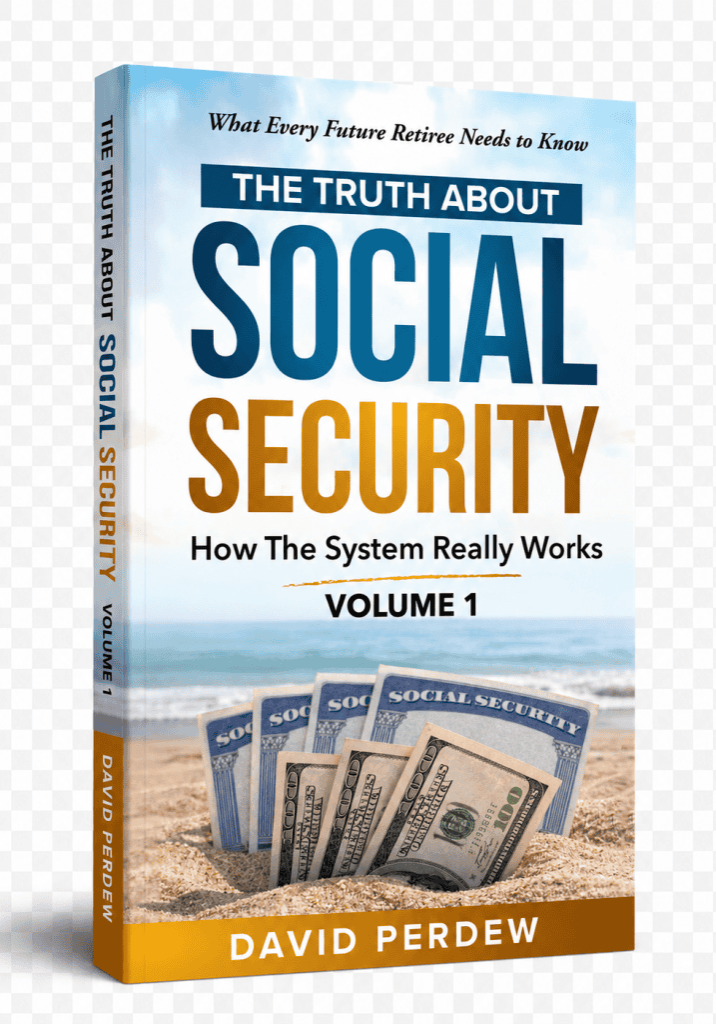
The Truth About Social Security: Volume 1
How the System Really Works
Before you can make a smart decision, you need to understand what you're actually dealing with. Most people don't.
- Learn exactly how your benefit is calculated, including why years you didn't work show up as zeros and permanently drag your number down
- Understand why Social Security is not a savings account, not going broke, and not working against you, and why the fear driving millions of early claims is based on headlines rather than facts
- Find out how your work history, not just your salary, determines the size of your check, and why certain types of employment may not count the way you assume
- Discover the difference between your full retirement age and the ages that actually matter most in your own financial picture
- See why Tom and Linda's simple question, "When should we file?", turns out to have a lot more underneath it than either of them expected
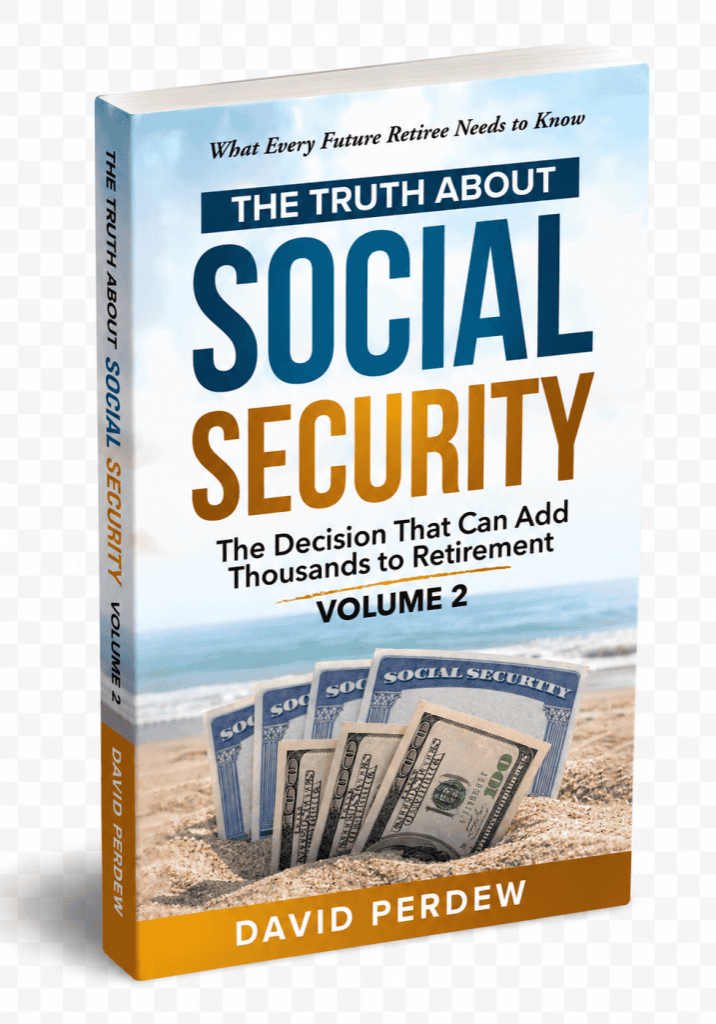
The Truth About Social Security: Volume 2
The Decision That Can Add Thousands to Retirement
This is the book most people wish they had found before they filed.
- See exactly what your benefit looks like at 62, at full retirement age, and at 70, side by side, so the trade-offs are plain instead of theoretical
- Understand the break-even calculation, what it actually tells you and what it doesn't, and why using it as your only guide can lead you to the wrong answer
- Learn how the earnings test works if you plan to keep working after claiming early, and why the withheld amounts aren't simply lost
- Find out why the decision you make for yourself is also a decision you're making for your spouse, whether you've framed it that way or not
- Understand why waiting until 70 is not automatically the right answer, and why claiming at 62 is not automatically the wrong one, and how to figure out which is true for your situation
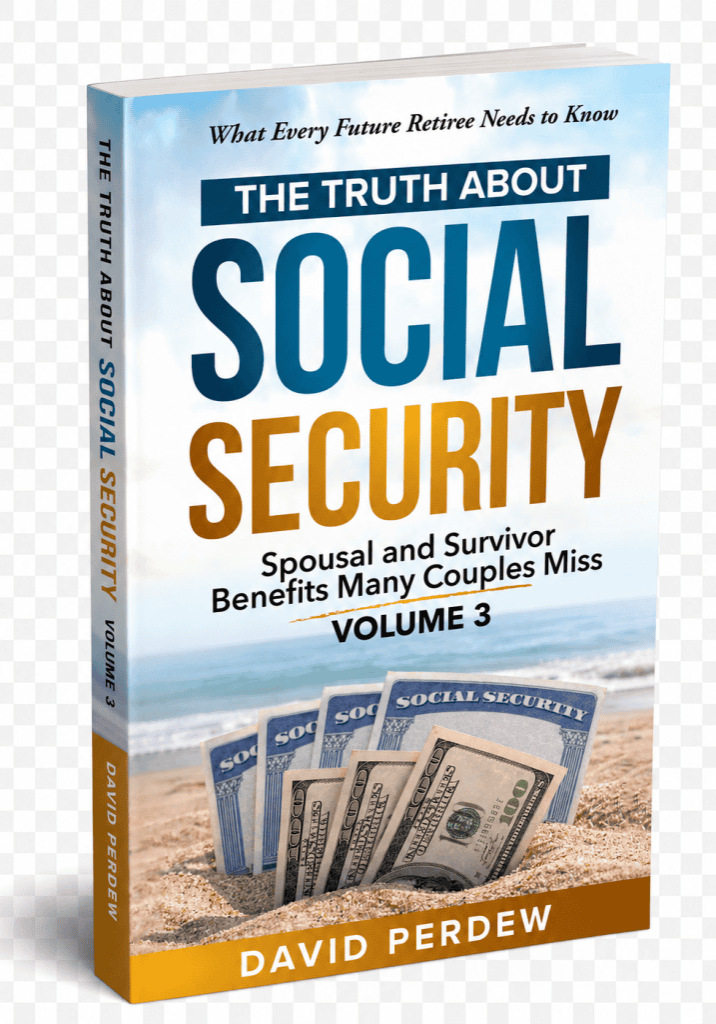
The Truth About Social Security: Volume 3
Spousal and Survivor Benefits Many Couples Miss
My wife asked me one question that stopped my entire plan cold: "What happens to me if you die first?" I had been planning for my retirement as if it were a solo endeavor. It wasn't.
- Learn how spousal benefits work, who qualifies, and why your spouse may be entitled to significantly more than their own record would suggest
- Understand how the higher earner's claiming decision shapes what the surviving spouse receives for years, sometimes a decade or more, after the first spouse is gone
- See why filing too early doesn't just reduce your monthly check. It reduces the financial security of the person you leave behind.
- Find out how divorced spouses may qualify for benefits based on an ex-partner's record, even years after the marriage ended, without reducing what either person receives
- Follow Tom and Linda as they realize the plan Tom built was only half a plan, because it accounted for his benefit but not for hers
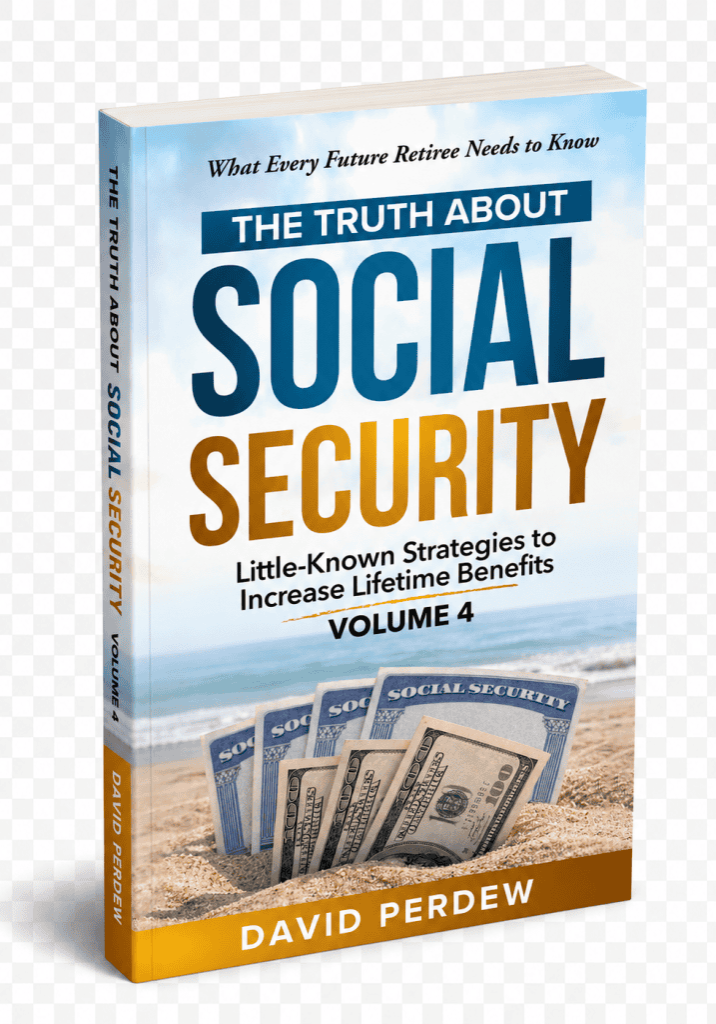
The Truth About Social Security: Volume 4
Little-Known Strategies to Increase Lifetime Benefits
When I finally looked at my SSA statement more closely, the number was lower than I expected. Then I found out I'd been making a quiet, fixable mistake for years.
- Find out how self-employed workers and business owners may be unintentionally creating low-earning or zero years in their record, and what can still be done about it before claiming
- Learn how targeted changes in the years before you file can replace weak years in the formula and raise your benefit permanently, entirely within the rules and by design
- Understand the tax consequences most people never see until it's too late, including how Social Security income combined with retirement account withdrawals can create a tax bill nobody planned for
- Discover coordination strategies between spouses that protect more household income from both taxation and unnecessary reduction
- See how Tom and Linda's accountant spotted a problem in ten minutes that they had never considered in months of careful planning on their own
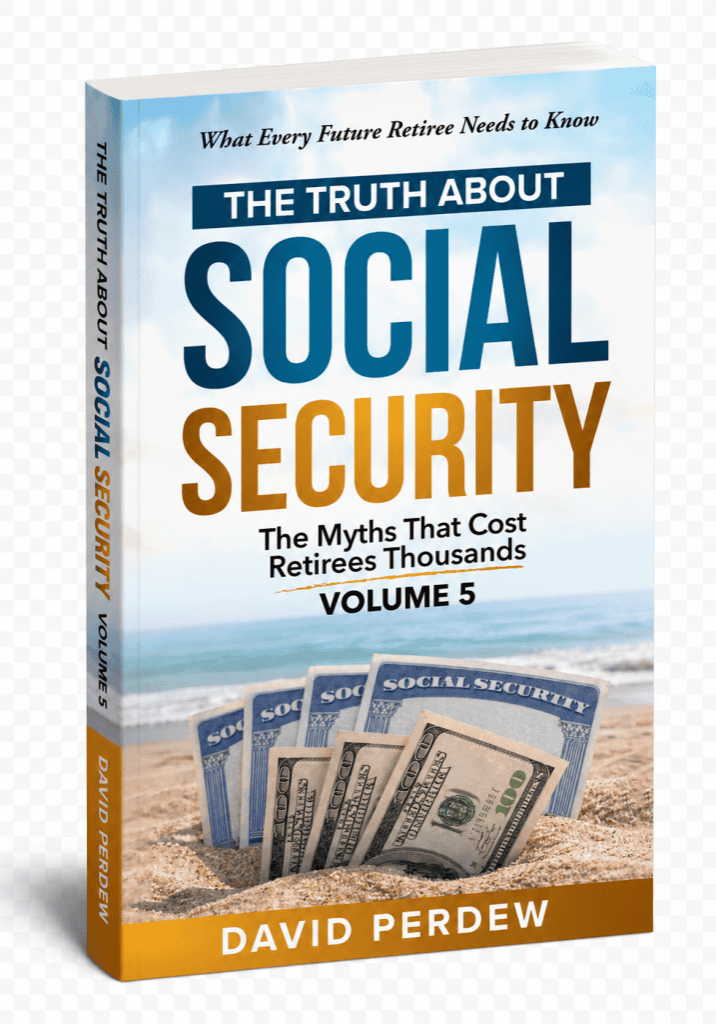
The Truth About Social Security: Volume 5
The Myths That Cost Retirees Thousands
Most people make this decision inside a fog of bad information. This book clears the fog.
- Get a plain answer to the claim driving more bad decisions than any other: that Social Security is going broke, and you should file early before the money disappears
- Understand which fears are completely unfounded, which contain a kernel of truth that deserves careful attention, and how to tell the difference before it costs you
- Learn why "always wait until 70" and "claim early because you'll break even anyway" are both dangerously oversimplified, and what actually determines the right answer for your situation
- Find out what would actually happen to your benefits if Congress makes changes, and why the most common assumptions about that scenario lead people in the wrong direction
- Follow Tom and Linda one year into retirement as they help neighbors and family members sort through the same fears and confusion they themselves once had
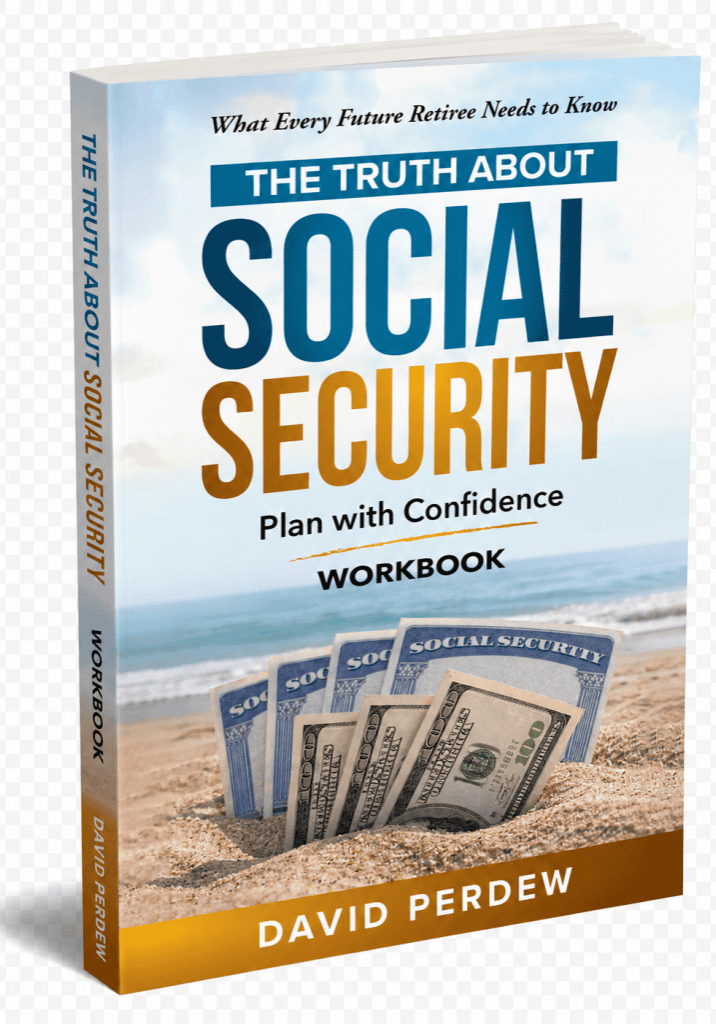

The Truth About Social Security: Workbook
Planning and Claiming Workbook Living Document
This is not a book you read once and set aside. It's a document you return to year after year as your life changes, your income shifts, and the rules evolve.
- Work through every major Social Security decision using your own numbers, your own timeline, and your own household situation, not a hypothetical built for someone else
- Compare claiming scenarios side by side and record the strategy you chose and why, so that the decision stays clear and documented as the years go by
- Update your plan each year as income changes, health considerations shift, or new rules take effect, because the right answer at 58 may not be the right answer at 63
- Use the coordination worksheets to map out both spouses' benefits together, because the household decision almost always matters more than either individual decision on its own
- Leave a written record your family can actually understand, so the people who survive you know what you planned, why you chose it, and what they're entitled to
No matter how nice and fragile I appear, I do better with people and spaces that are direct, honest, and truthful, even if it hurts.
David Perdew is one of the people I am blessed to call a trusted guru. I respect him beyond measure. He’s a natural teacher who cares and shares. But he’s also direct, honest, and truthful.
He does his research…he puts in the work that others don’t. In turn, he propels in ways that others can’t.
All that said, I am getting his book after this posting. Be sure you do too.

Tameaka Shelton
Lead Well Together
David’s book taught me more about Social Security than I ever learned in all my working years. He explains everything in plain language, and the real stories and history make it easy to understand why the program matters so much.
I honestly wish I had this information before I retired. David covers how Social Security started, how it grew, and what it means for families today. As he writes, “Growing old should not mean growing poor,” and this book makes that clear.
If you’re retired or getting close, this is a must‑have.

Randy Booth
Booth Associates LLC
Bonus
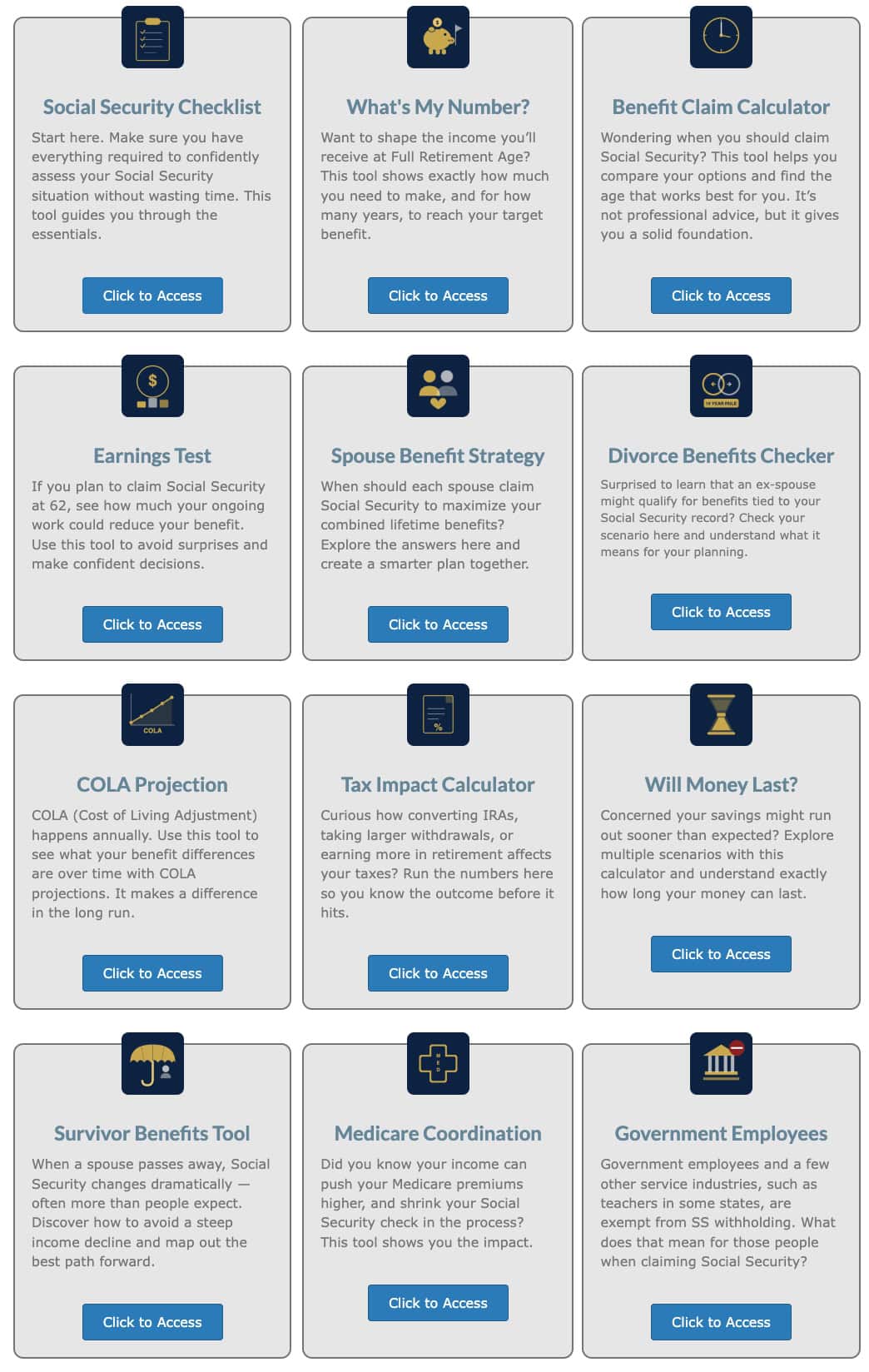
12 Free Tools to Help You Make the Right Decisions
There's a lot of math involved in making the right Social Security claiming decision. That's why we created these free tools to help you analyze your situation as you progress through each volume.
These calculators take the concepts on the page and apply them directly to your situation. Run your own numbers. Compare your own scenarios. See exactly how the rules play out for you, not for a generic example, before you make a decision that can't be unmade.
If You Close This Page and Do Nothing, Here's What Doesn't Change.
The decision is still coming. The rules are still complicated. The information you're getting from friends, from headlines, and from a five-minute read on a government website is still incomplete. And when you eventually sit down and pick a date, you'll still be doing what my father did and what I almost did.
Guessing.
The cost of that guess is not abstract. It's a reduced monthly benefit you'll collect for twenty or thirty years. It's a spouse left with less income after you're gone, potentially for a decade or more, at the moment when they're most vulnerable and least able to make up the difference. It's thousands of dollars in income that existed in the rules but never made it into your check because nobody told you to look for it.
You don't have to guess. The rules are knowable. The strategies are real. The adjustments are still available to you if you're in the right window.
Make the right decision now. Get the entire series.